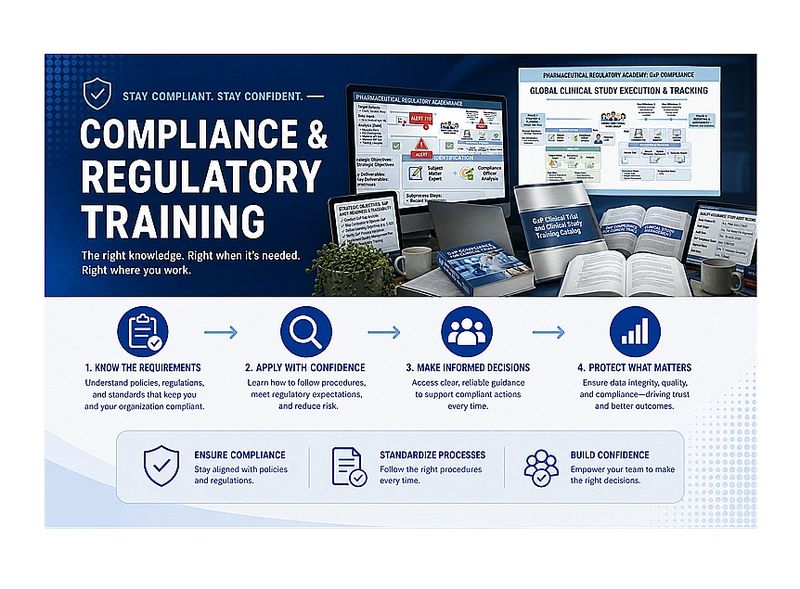
Compliance and Regulatory Training
Launching a global clinical study under pressure leaves no room for error—this course shows how to turn complexity into clarity. Discover how dense regulatory requirements and high-stakes processes were transformed into streamlined, role-specific learning and immersive simulations that drive real-world performance. See how a scalable “Learning Infrastructure” reduced cognitive overload while meeting every audit requirement with confidence. Click to explore how smarter training can accelerate readiness when it matters most.
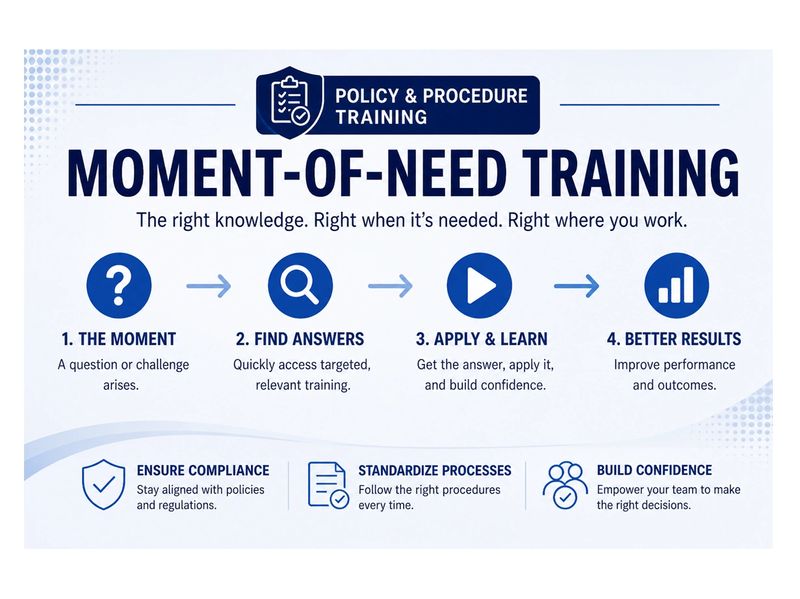
Policy and Procedures Training
What if training didn’t fade before it mattered most? This course reveals how a critical gap in government policy implementation was solved by shifting from one-time training to a powerful “Moment-of-Need” approach. See how interactive tools, decision trees, and built-in calculators replaced memorization with real-time accuracy in the field. Click to discover how this strategy reduces errors, ensures compliance, and supports performance exactly when it counts.
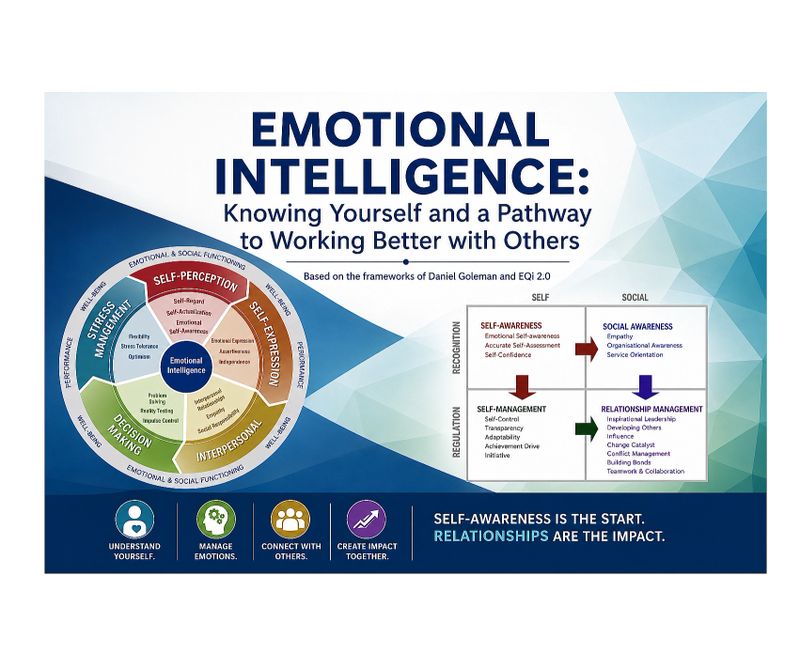
Emotional Intelligence Training
Emotional Intelligence: Knowing Yourself and a Pathway to Working Better with Others starts from the inside out by exploring the “why” behind how we think, react, and show up every day. Grounded in neuroscience and anchored in Daniel Goleman’s Emotional Intelligence model, the series begins with core EI domains before diving deeper into the EQ-i 2.0 framework to explore self-perception, expression, decision-making, and stress management. Along the way, learners consider concepts like the Amygdala Hijack, building the awareness to pause, reset, and respond with intention. These insights provide a clearer, more constructive perspective about yourself and how you interact with other. In the workplace this transforms relationships and delivers measurable impact on team dynamics. This series won the 2025 Brandon Hall Bronze medal for Best Leadership Development Program.
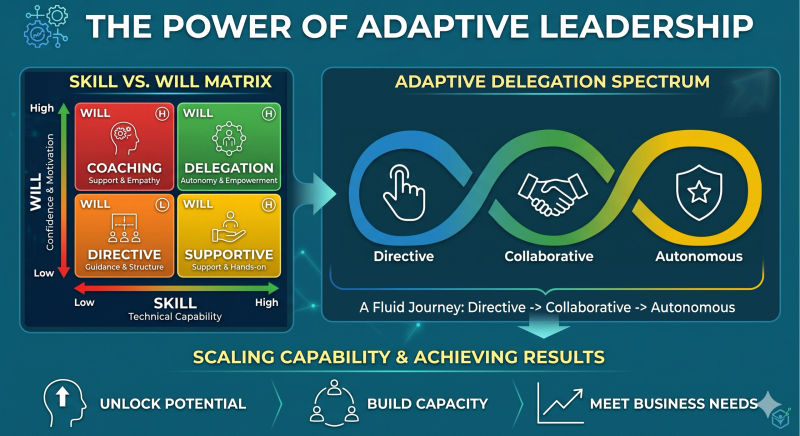
Adaptive Leadership
Effective leadership requires a departure from one-size-fits-all management in favor of a personal approach. This bridges the gap between building individual potential and overall team capacity, while simultaneously increasing the team’s ability to meet the needs of the business. This adaptive leadership approach transforms frameworks like the Skill vs. Will matrix and the Delegation Spectrum into tangible strategies, allowing leaders to accurately assess each individual on their team and provide the specific guidance needed for growth. By operationalizing delegation as a fluid spectrum—rather than a binary choice between micromanagement and full autonomy—this solution helps teams expand their collective capacity by leaning into individual growth and shared strengths and skill development.
Safety and Security Training
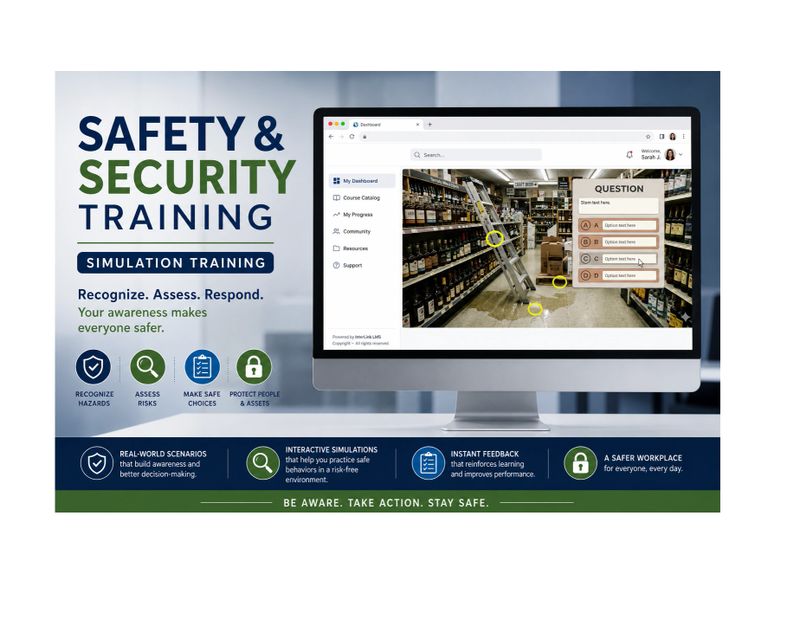
Move beyond traditional lectures and start empowering your team with a learning architecture that bridges the gap between theory and high-stakes retail practice. This two-module experience transforms real-world security footage and documented hazards into immersive 360 simulations, where employees master threat detection and execute situational judgment. By transforming complex safety protocols into a narrative-driven assessment, this learning solution moved safety off the page and embeded active environmental awareness into daily operations.
Other Leadership Topics
Cultural Intelligence
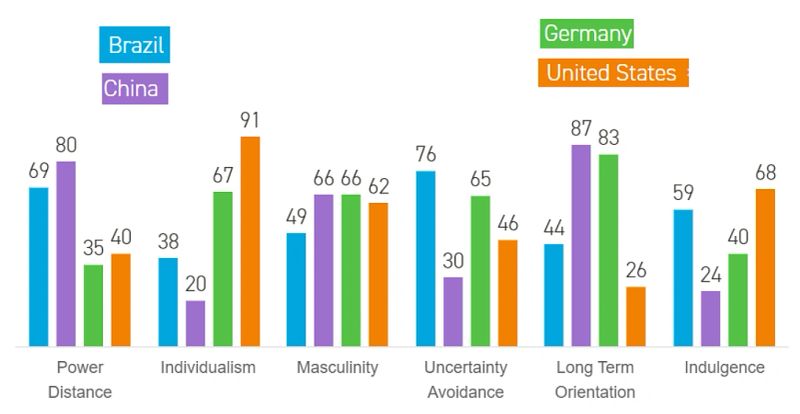
Success in a global business environment requires a high degree of cultural intelligence. But that doesn't mean leaders must know every single nuance. True leadership lies in identifying potential differences as they arise, staying open to what they offer, and incorporating them into how the team works. It’s about knowing how to research the unknown and possessing the facilitation skills to both value and leverage those unique perspectives.
By combining Hofstede’s Cultural Dimensions with practical leadership frameworks, I equip executives to make cultural dynamics visible and manageable. My approach centers on fostering curiosity and intentional cross-cultural engagement.
Ultimately, this drives stronger team alignment, eliminates communication barriers, and elevates leadership efficacy across global organizations.
The SBIA Feedback Exchange
A workforce cannot grow without a culture of continuous impactful feedback, which is why I treat effective feedback strategies as its own distinct leadership skill.
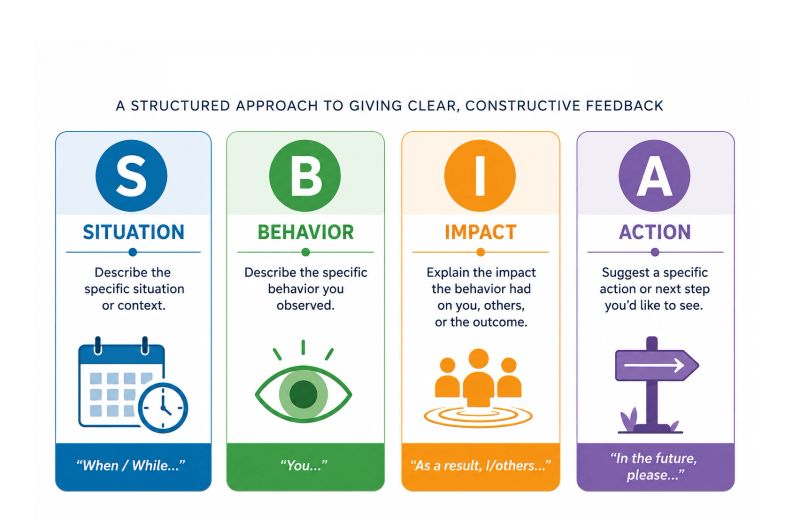
We strip away the anxiety and defensiveness that often stall performance conversations by utilizing the SBIA model. By anchoring feedback in a specific situation, focusing on observable behavior, and articulating its direct impact, leaders can approach accountability through a human-first lens. This objective clarity allows leaders and employees to partner together, co-creating a clear, actionable path forward for the future. This two-way conversation transforms feedback into a powerful engine for trust, behavioral alignment, and continuous workforce growth.
Strategies for Developing Talent
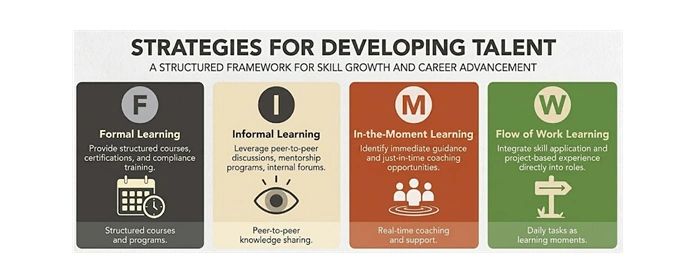
My approach to talent leadership development is grounded in the understanding that learning does not happen through a single method or moment. Effective leaders must understand how people acquire both knowledge and skills, and how different learning strategies serve different purposes.
I specialize in designing learning ecosystems across organizations while also helping leaders build development models within their own teams. This includes teaching the purpose and practical use of formal learning methods—such as instructor-led training, coaching, workshops, and eLearning—alongside real-time learning embedded into the flow of work through peer support, side-by-side guidance, manager reinforcement, and in-the-moment developmental conversations.
The goal is to create environments where learning becomes continuous, practical, and directly connected to day-to-day performance rather than isolated to standalone training events.
Team Building Workshops
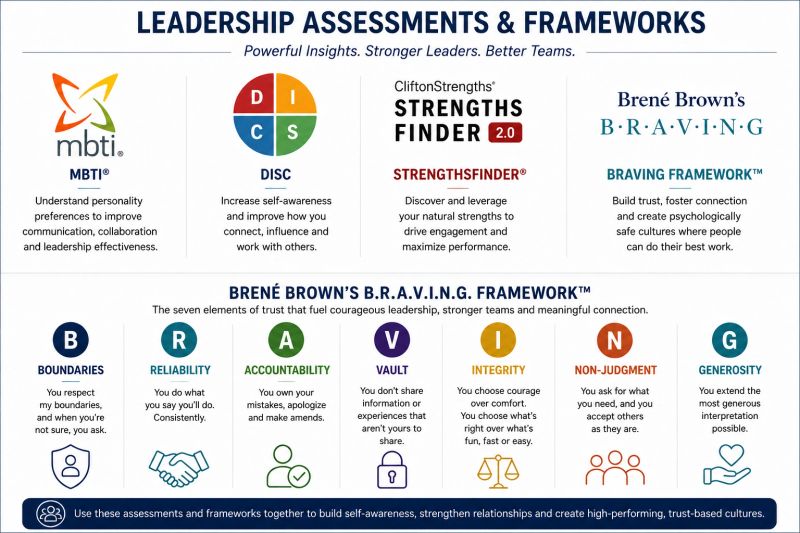
Skilled leaders recognize the importance of strong team dynamics. They intentionally build effective teams by leveraging both individual talents and collective strengths. Using instruments such as MBTI, StrengthsFinder, DiSC, and Brené Brown’s BRAVING framework, I partner with leaders to design and facilitate targeted team workshops tailored to their specific goals and challenges.
These workshops engage all team members in shaping a shared vision for the team—whether the focus is on establishing foundational expectations for a newly formed team, strengthening collaboration, or identifying individual and collective strengths to develop a strengths-based strategy and uncover potential team gaps. While the assessment tools may remain consistent, my approach is always customized to address the unique dynamics, priorities, and desired outcomes of each team.
Conflict Management
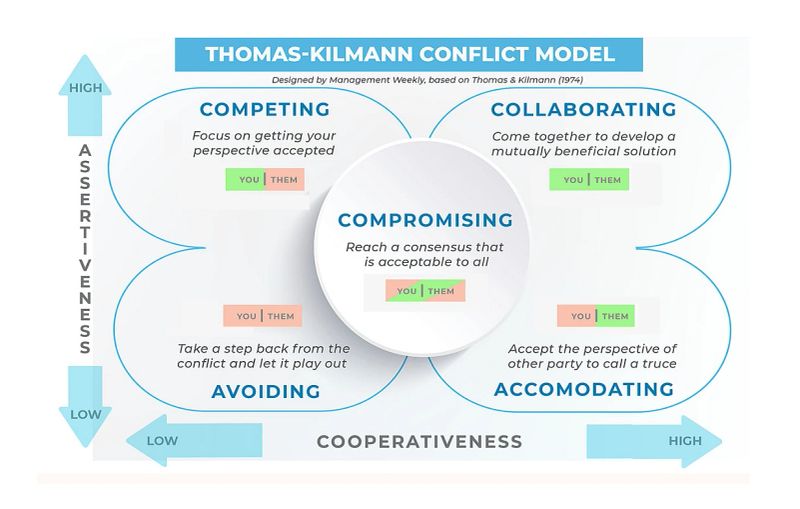
Effective leaders recognize that even in high-performing teams, conflict is inevitable. My approach focuses on arming leaders with the knowledge and skills to navigate that natural tension in a productive way, beginning with self-awareness. Using the Thomas-Kilmann Conflict Mode Instrument (TKI), we first identify a leader’s default conflict style to surface where they naturally excel and where potential blind spots emerge under pressure.
From there, the work shifts toward situational agility—moving beyond a single preferred style to understanding all five conflict modes through the lenses of assertiveness and cooperativeness.
Leaders learn to flex their approach based on context, knowing when a situation calls for decisive direction versus when it benefits from deeper collaboration and shared problem-solving. This shift from reactive behavior to intentional choice equips leaders to balance business priorities with team dynamics—making clear, timely decisions while still fostering trust, alignment, and effective collaboration.
Change Management
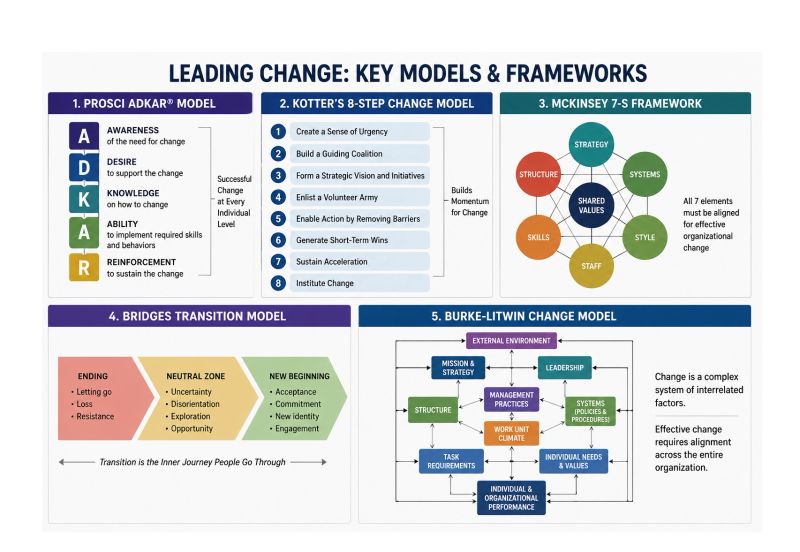
When it comes to change management, the industry is filled with methodologies such as the ADKAR Model, Bridges Transition Model, Kübler-Ross Change Curve, McKinsey 7S Framework, Kotter's 8-Step Change Model, and the Burke–Litwin Model. While each model offers valuable insights, I’ve found that they all come down to two core ideas: implementing business change and helping people successfully adapt to it.
My approach combines the strongest elements of these models focusing on the human side of change. We consider the most common challenges that come with change, including uncertainty, resistance, lack of clarity, competing priorities, and change fatigue. By creating space for open communication, involving employees in the process, and providing practical support along the way, teams are better equipped to build trust, adaptability, and long-term adoption of new ways of working.